Kudakwashe Emma Zihonye
For Kimberly Zizanhi a Grade 5 pupil at Eastwise Junior School in Mabvuku, Harare, planting trees goes beyond just caring about the environment – it connects deeply with the very essence of existence itself.
She is part of a group of determined young people who share a common vision under Eastwise Junior School’s Environmental Club.
“Trees play a crucial role in our environment most importantly through providing clean air and the oxygen that we breathe,” Zizanhi told She Corresponds Africa.
Eastwise Junior School’s Environmental Club has become a beacon of inspiration through its massive associated reforestation in partnership with the Greater Green Project in an effort to combat deforestation and its environmental consequences. Their goal is to plant numerous trees across the vast landscapes of Zimbabwe before 2030.
According to United Nations Development Programme the rate of deforestation inZimbabwe is one of the highest in the world. Wood accounts for over 60% of the total energy supply in the country and almost 98% of rural people rely on fuel wood for cooking and heating.
Also on She Corresponds Africa Kadzombe makes history as independent councillor
The rate of deforestation in the country accelerated to 327,000 ha per year between 2000 and 2010 and is also currently the highest in southern Africa directly affecting ecosystems, biodiversity, and livelihoods.
The students of Eastwise Junior School have showcased unwavering dedication and passion for environmental conservation. Their hard work and perseverance has already borne fruit, with some students planting more than 10 trees each. Their commitment does not stop at planting alone; they are actively engaged in nurturing and fostering the growth of these trees, ensuring their long-term survival.
Rutendo Nyika, another student at Eastwise, said since joining the Environmental Club, she has learned a lot about the different species of trees, their importance, how to plant trees, and the methods of planting trees.
“Everything I have learned at our Environmental Club, I am putting into practice as I am currently planting trees with my family and nurturing them. I have already planted over 10 trees in my community,” she said.
Zimbabwe boasts several globally significant biodiversity hotspots and harbors a remarkable array of life, encompassing more than 5,930 plant species and over 1,360 animal species. Forests blanket approximately 45% of the nation’s land, but the escalating concern of deforestation poses a daunting challenge as these vital ecosystems vanish at an alarming pace.
These young environmental enthusiasts understand the significance of their actions as they are focusing on nurturing nutrient rich trees such as the Moringa tree. By caring for the trees they have planted, they are actively contributing to the restoration of crucial ecosystems.
Trees, as natural warriors against climate change, absorb carbon dioxide and release oxygen, thereby enhancing air quality. Moreover, they provide habitats for a diverse array of flora and fauna, promoting biodiversity and acting as guardians against soil erosion.
Environmental Management Agency(EMA)’s Environmental Education and Publicity Manage Amkela Sidange said Environmental clubs serve as platforms for educating and empowering students to become environmentally conscious and active citizens.
“EMA views environmental school clubs as instrumental in fostering a sense of environmental stewardship and responsibility among young individuals, thereby contributing to the overall conservation efforts. By participating in club activities, students are exposed to real-world environmental challenges and are encouraged to take proactive measures to address them,” she said.
Also on She Corresponds Africa “Endometriosis: Zimbabwean women challenge taboos, find strength in support networks”
Environmental school clubs are playing a crucial role in Zimbabwe to address environmental conservation as different schools through different projects.
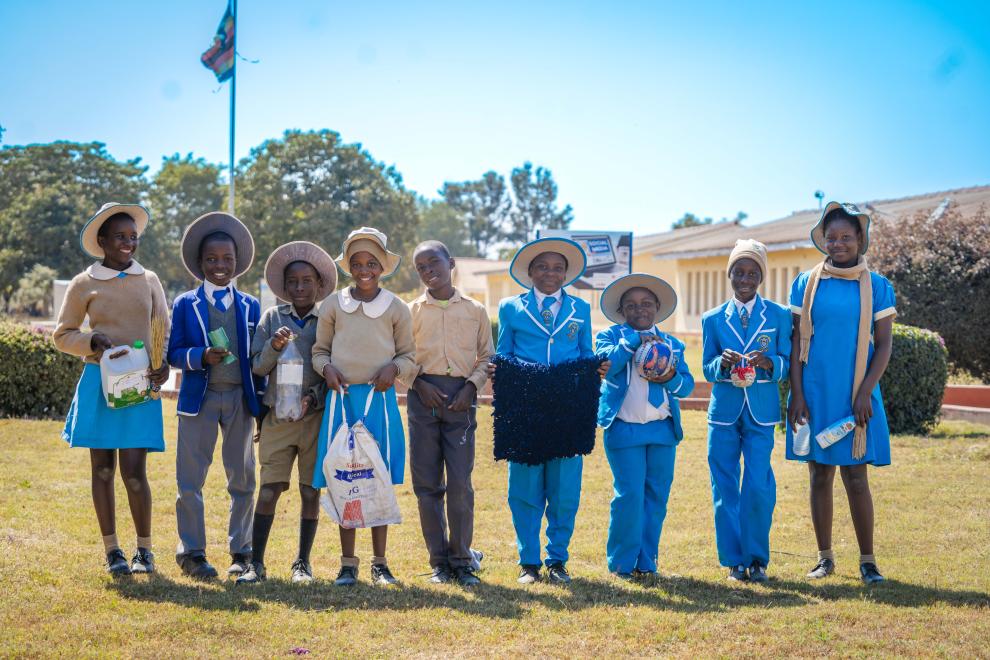
With the surge of plastic pollution in the country, Makomo Primary School in Epworth has captured the hearts and minds of many, emerging as a beacon of hope in the battle against poor waste management plastic pollution, through its environment club.
The club is made up of 56 young members who, have embarked on awe-inspiring projects that harness the potential of discarded plastics, showcasing their remarkable innovation and unwavering commitment to conservation.
Plastic pollution has become a global concern, with the United Nations reporting that over 400 million tonnes of plastic is produced annually, of which less than 10 percent is recycled. Disturbed by these alarming statistics, Makomo Primary School’s environment club decided to take matters into its own hands. Pupils are finding practical solutions to combat plastic waste.
Statistics from the World Health Organisation 2023 shows that an estimated 19 to 23 million tonnes of plastics end up in lakes, rivers, and seas annually dangering the lives of animals and people every day.
Notable projects undertaken by the club was the creation of unique school bags using old plastic bags. One of the students a Grade 7 pupil demonstrated remarkable creativity by and repurposing of discarded plastic bags into a functional and eco-friendly school bag.
Some students in the club utilized plastic waste to craft balls and mats, among other things, showcasing their resourcefulness and commitment to reducing plastic pollution.
Makomo Primary School Environmental Club Coach Mr Sifelani Mzingwani told She Corresponds Africa that it is very important to teach children the importance of environmental management and also put it into practice.
“When the children are involved in waste and environmental management learning and practicing, it shapes their perceptions and behavior hence. We catch them young. Waste picking fosters awareness and a responsibility. Positive learning results in change of behavior since knowledge leads to wisdom. When students are exposed to environmental awareness and sound environmental practices the world will be a better place,” he said.
Students bring plastic waste from both the school premises and their homes to the designated sorting area at the school. In an effort to prioritize their safety, the children are strictly prohibited from collecting plastic waste from the streets.
The aim of the club is to have children’s participatory cultures and behaviors to promote environmental consciousness, green living, appreciation of surroundings, sustainable knowledge attainment, and environmental stewardship.
In Matabeleland South Province, Sacred Heart Girls High School is leading Environmental champions in Climate-Smart Agriculture with a visionary approach to sustainable farming.
The champions are prioritizing resource efficiency and organic environmental responsibility. They have successfully implemented innovative practices such as harnessing the power of rabbit urine and repurposing leftover food as valuable sources of manure, setting an inspiring example for sustainable agriculture.
The potential of rabbit urine is often overlooked, however, the champions recognized its value as a natural insecticide. By collecting and carefully applying rabbit urine, the school effectively controls pests while minimizing the reliance on harmful chemical pesticides.
“Rabbit urine is used as an insecticide”, said Sindiso Sherpard Thwala, Environmental Club Patron at Sacred Heart Girls High Thwala added that the club has diverse projects focusing on preserving the environment from chemical damages.
“We rear fish, goats, pigs, ducks, rabbits, turkeys, chickens and cows. The waste from the animals is then used as manure in our gardens and in the orchard, which allows us to maintain green gardens. This is our way of recycling organic waste,” he said.
“The waste and leftovers from the dining hall are used to feed these animals, this is our way of recycling organic waste.”
The waste generated by the animals, including manure and other organic residues, takes on a central role as a key input for the school’s gardens and orchard. Through meticulous composting and nutrient management practices, the school converts this waste into nutrient-rich organic manure. This organic manure not only enriches the soil but also enhances its water-holding capacity and overall fertility. As a result, the school maintains vibrant green gardens and cultivates healthy, productive crops.
By adopting this closed-loop system of recycling organic waste, Sacred Heart School significantly reduces its reliance on synthetic fertilizers and chemical inputs. This achievement not only minimizes the environmental impact of their agricultural activities but also contributes to mitigating climate change by decreasing the greenhouse gas emissions associated with conventional fertilizer production and use.
Primary and Secondary Education ministry spokesperson Taungana Ndoro said the ministry is committed to promoting environmentalism through our comprehensive curriculum. The Ministry of Education has integrated various educational initiatives and strategies into our curriculum to foster a deep understanding and appreciation for the environment among our students.
“One of the primary ways we promote environmentalism is by incorporating environmental subjects across different grades and levels. Environmental Clubs are not mandatory in schools but have we have 10 517 Schools with these Environmental clubs”, he said.
EMA places emphasis on environmental management education for children in Zimbabwe as a way of fostering a clean and sustainable future. By raising environmental awareness among children, a strong sense of environmental responsibility is nurtured from an early age.
You might also like…
As Parents Seek Opportunity Abroad, Children in Zimbabwe Find Abuse at Home
Pandora’s Lunchbox: How School Fees Embody the Chaos of Zimbabwe’s Currency System